
Twilio Verify is a good option for businesses that need OTP verification across channels such as SMS, WhatsApp, email, and voice. However, depending on your verification volume and the countries you serve, you may be looking for a different pricing model or a provider that better fits your delivery requirements.
Twilio charges a successful-verification fee plus applicable channel charges, while retries and fallback attempts can add to your delivery costs.
For applications serving multiple markets, you may also want a provider that automatically selects a lower-cost eligible channel, falls back to another option when delivery is not confirmed, and gives your team clear visibility into delivery status and costs.
In this article, we’ll share how our own OTP verification platform, SecondFactor, addresses these needs, then cover seven other products similar to Twilio Verify.
1. SecondFactor
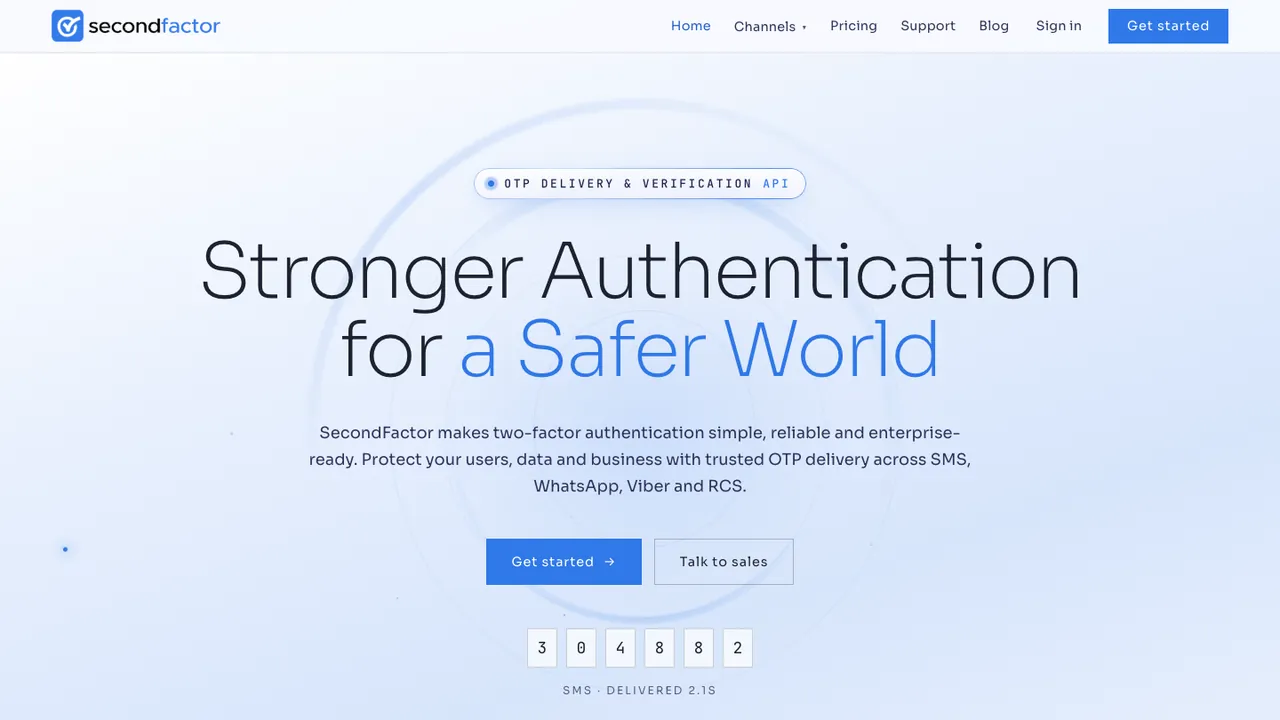
At SecondFactor, we help businesses send and verify OTPs across SMS, WhatsApp, Viber, and RCS through one API.
Our platform handles channel selection, delivery, fallback, and code verification, so your developers do not need to build separate workflows for each channel.
We keep our delivery costs down by selecting the lowest-cost eligible channel for each recipient, while handling fallback when the first attempt does not confirm delivery.
Choose the Lowest-Cost Eligible OTP Channel
Our Price Intelligence Engine (PIE) evaluates the delivery options for each OTP request. It identifies the destination country and operator, checks which channels are available and eligible for your account, and ranks those options by cost before sending the code.
PIE considers requirements such as a verified WhatsApp Business Account or a registered sender ID where applicable, rather than choosing a channel based on price alone.
This lets you use different delivery channels across markets without having to maintain your own country-by-country channel-selection rules.
Fall Back Automatically When Delivery Is Not Confirmed
When the first channel does not confirm delivery, PIE automatically moves to the next eligible option. Your developers do not need to trigger that change or build a separate fallback workflow.
For example, PIE can attempt WhatsApp first and then move to SMS when it does not receive delivery confirmation.
The platform also handles situations where a lower-cost channel cannot reach the recipient, such as when they do not have the relevant messaging app installed.
That gives the verification flow another way to reach the user instead of relying on repeated attempts through the same channel.
Send and Verify OTPs With Two API Calls
Your application starts the process with a request to POST /otp/send, passing the recipient’s phone number. SecondFactor selects the delivery channel, sends the code, and returns a request ID.
When the user enters their code, your application submits it to POST /otp/verify. We validate the code server-side and return the verification result. Your backend does not need to generate, store, or independently check the OTP.
The same send-and-verify flow works across the supported delivery channels. Your team integrates with SecondFactor rather than maintaining a different verification implementation for SMS, WhatsApp, Viber, and RCS.
Track Delivery Status and Costs in One Place
Our OTP logs bring delivery records from all four channels into one place. Each record includes the date, recipient’s phone number, country, delivery status, channel, and cost.
When a user reports that a code has not arrived, your team can review the channel used and its recorded delivery outcome. You can also examine the cost alongside the destination and channel, rather than relying only on an account-level spending total.
You can test the full process in our PIE Playground before integrating it into your application. Send a real OTP, see which channel PIE selected and whether fallback occurred, then enter the code to complete verification.
Create your SecondFactor account to test the send-and-verify flow, or contact our team to discuss pricing for the markets you serve.
2. Vonage Verify
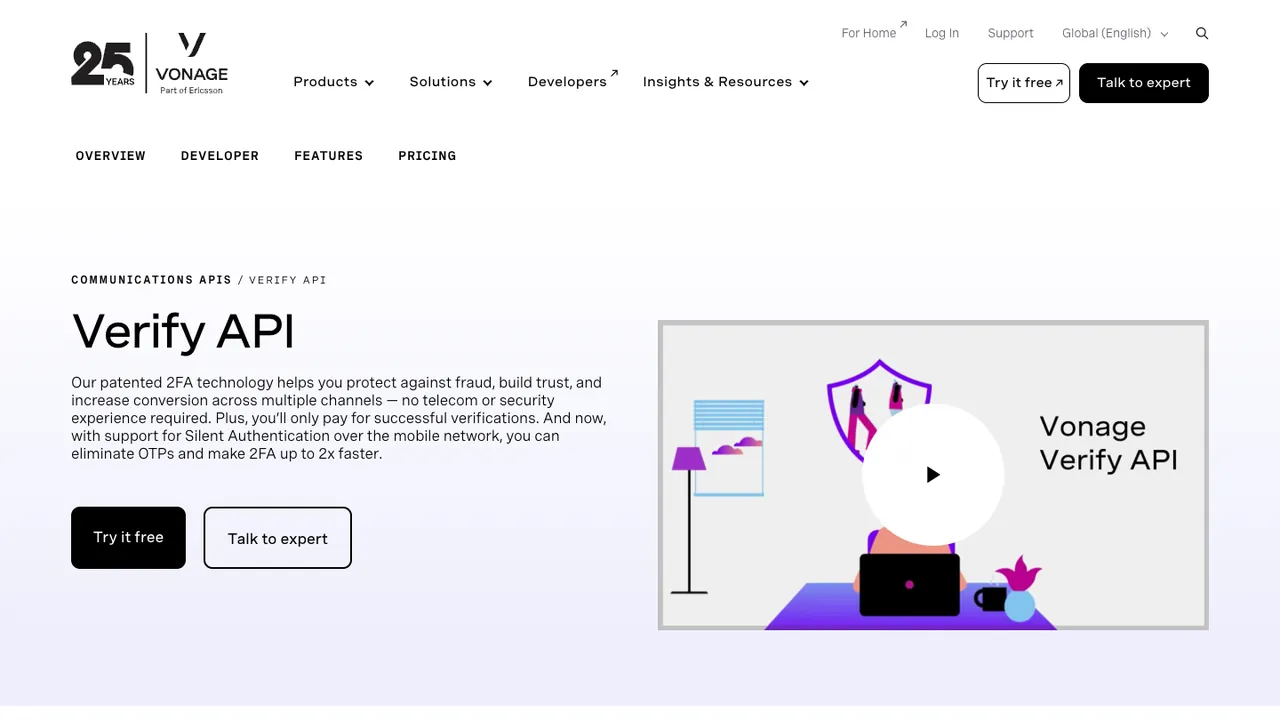
Vonage Verify is a managed verification service for businesses that need OTP delivery across SMS, WhatsApp, RCS, email, and voice.
It handles code generation, sender management, and fallback through one API, while giving your developers control over the verification workflow.
You can customize the order in which Vonage tries different channels, such as starting with SMS and using a voice call as a backup. Vonage also offers Silent Authentication, which uses the mobile network to verify users without asking them to enter an OTP.
Vonage offers two pricing models. Its Verify Conversion plan lists a fee of $0.06084 (€0.052) per successful verification, plus applicable messaging and voice charges. Its separate Verify Success model offers all-in pricing for successful verifications, with no charge for unsuccessful attempts, but requires a sales quote.
Verify Conversion still includes a separate verification fee, so compare the delivery rates and expected number of attempts in your main markets rather than assuming that switching providers will lower your bill.
3. Sinch Verification
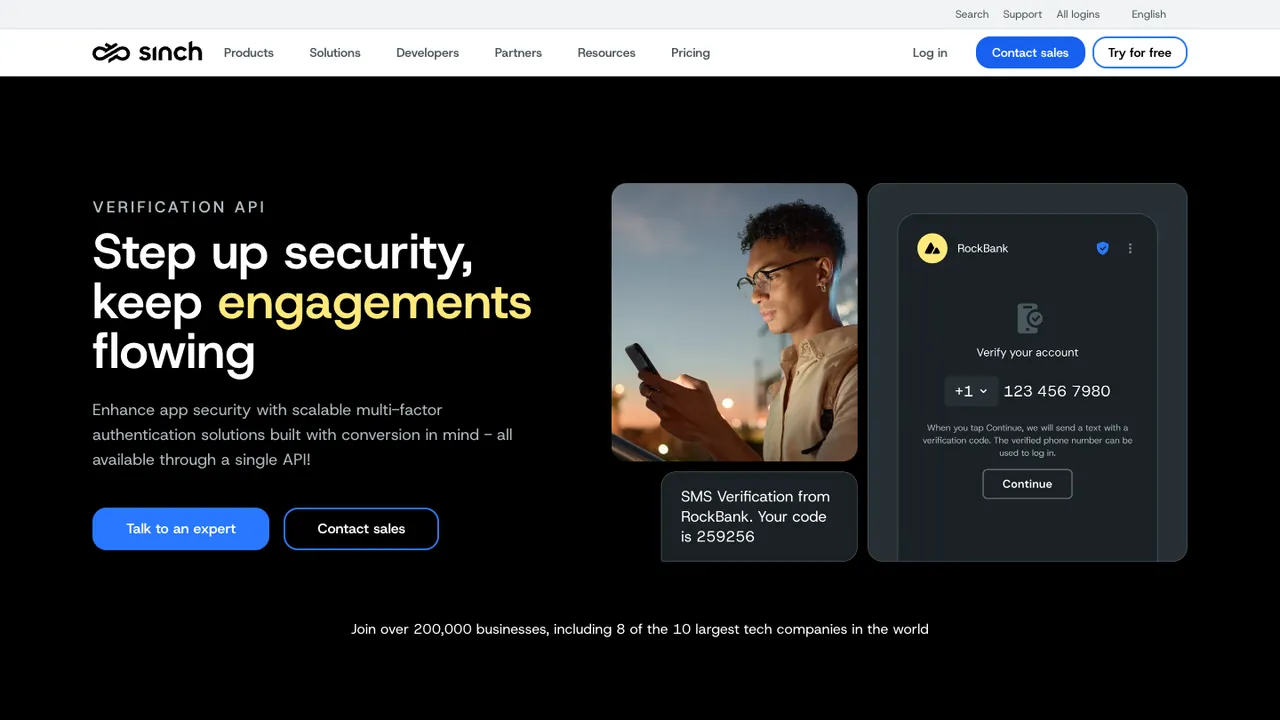
Sinch Verification focuses on phone-number verification through SMS, voice calls, flash calls, and data-based verification. Its range of phone and mobile-network methods makes it an option for businesses that want to explore alternatives to a conventional SMS-only verification flow.
Sinch’s Flash-call verification uses the incoming number from a dropped call as the verification code, with automatic processing available on Android. Data Verification checks the phone number through the mobile operator’s network without requiring the user to enter a code, although it is not suitable for every market or application.
Sinch provides a REST API and SDK resources for Android, iOS, and JavaScript, so developers can integrate verification into mobile apps and web applications. The implementation and user experience depend on the method and platform you choose.
Sinch uses pricing that varies by verification method and destination rather than one universal rate. Request rates for the countries you serve and the methods you plan to use, including any fallback attempts, to compare the cost against your existing verification workflow.
4. Infobip Authenticate
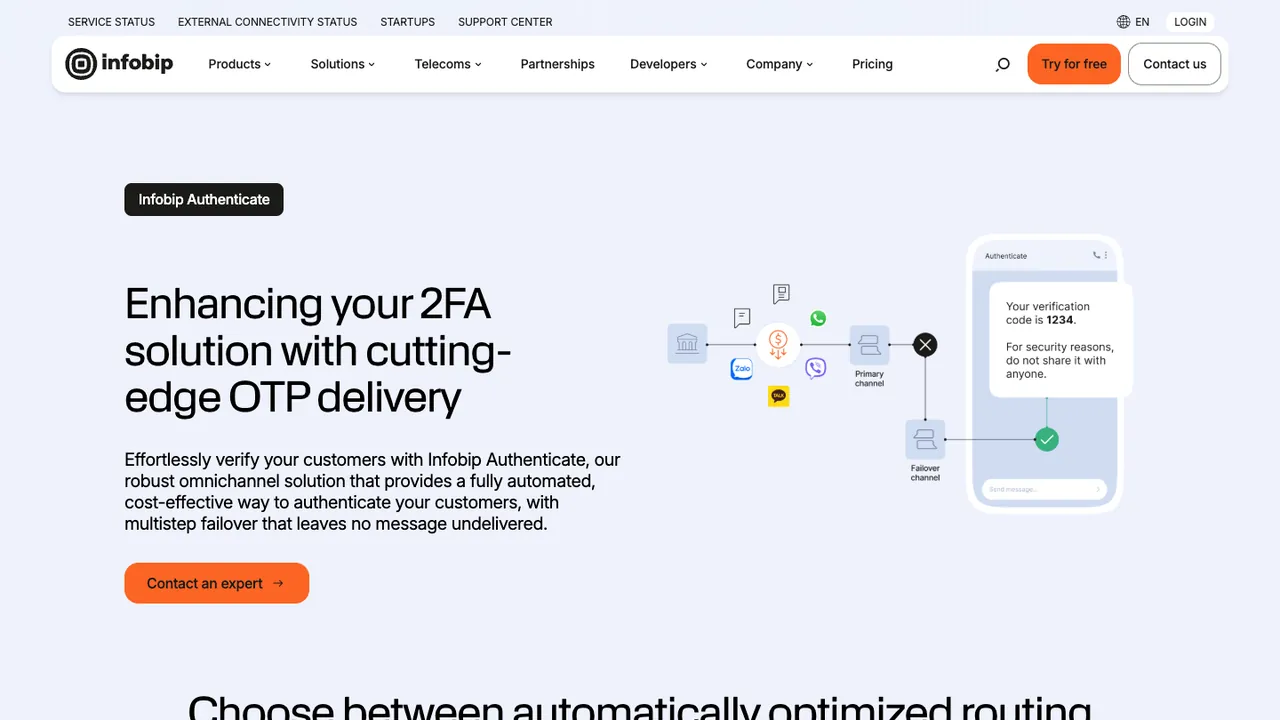
Infobip Authenticate helps businesses manage OTP delivery across multiple channels and markets. It supports channels such as SMS, WhatsApp, RCS, and Viber, with automated routing and multistep fallback when an initial delivery attempt fails.
Businesses can use its optimized routing to select cost-effective delivery options rather than send every code through the same channel.
The core 2FA API generates and verifies PINs through SMS, voice, and email. Authenticate extends the offering with additional channels and routing capabilities, so confirm which product covers the channels and workflows you plan to use.
Infobip also offers Signals, an anti-fraud solution that detects and blocks artificially inflated OTP traffic. Authenticate provides delivery reports and logs, which give your team visibility into delivery performance.
Infobip describes delivery-based billing for optimized routing, but you will need a quote to compare your expected costs.
5. Telnyx Verify
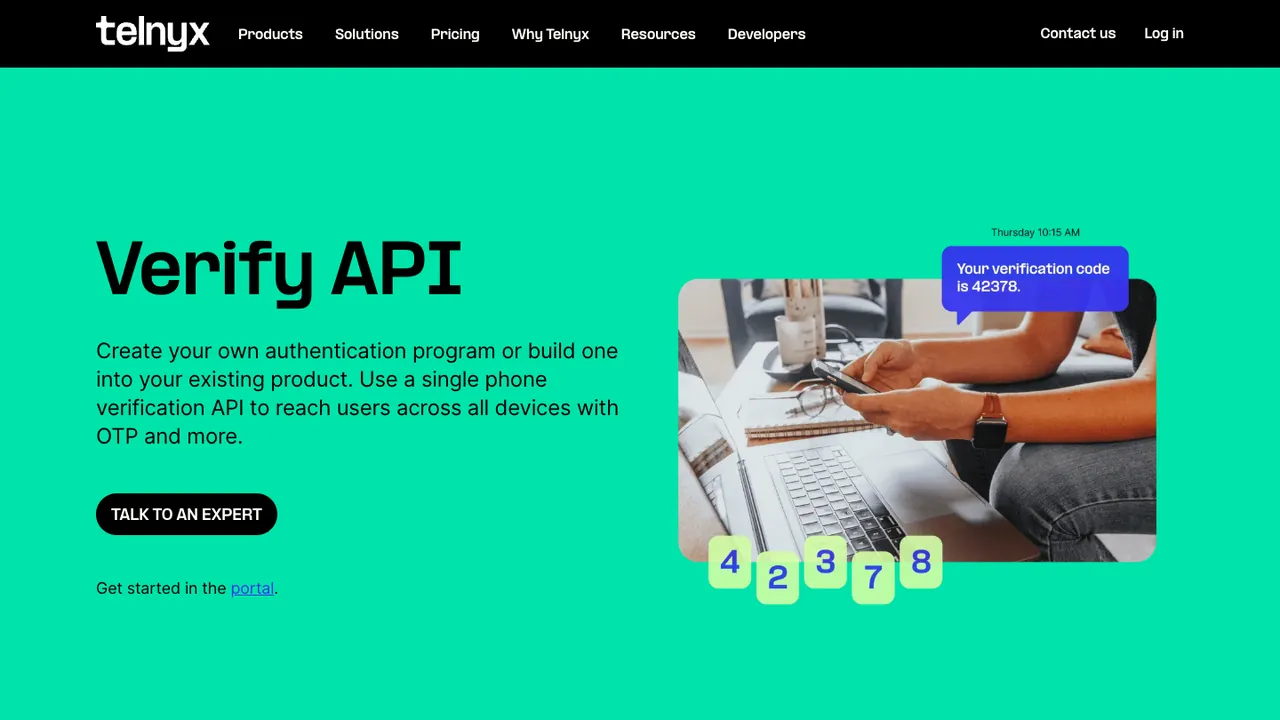
Telnyx Verify is a phone-verification API that supports SMS, voice calls, WhatsApp, and flash calls. It handles code generation, delivery, expiration, and validation, so your developers can add verification without maintaining their own OTP storage and checking logic.
Telnyx also provides customizable message templates, rate limits, and fraud controls to help manage excessive requests and verification attempts.
For delivery monitoring, it offers webhooks that provide updates on verification delivery and completion. Your application can also distinguish between valid, expired, and incorrect codes when it submits a verification check.
Telnyx advertises support for more than 190 country codes and publishes integration examples for languages including Python, Ruby, Node.js, PHP, and .NET.
6. Plivo Verify
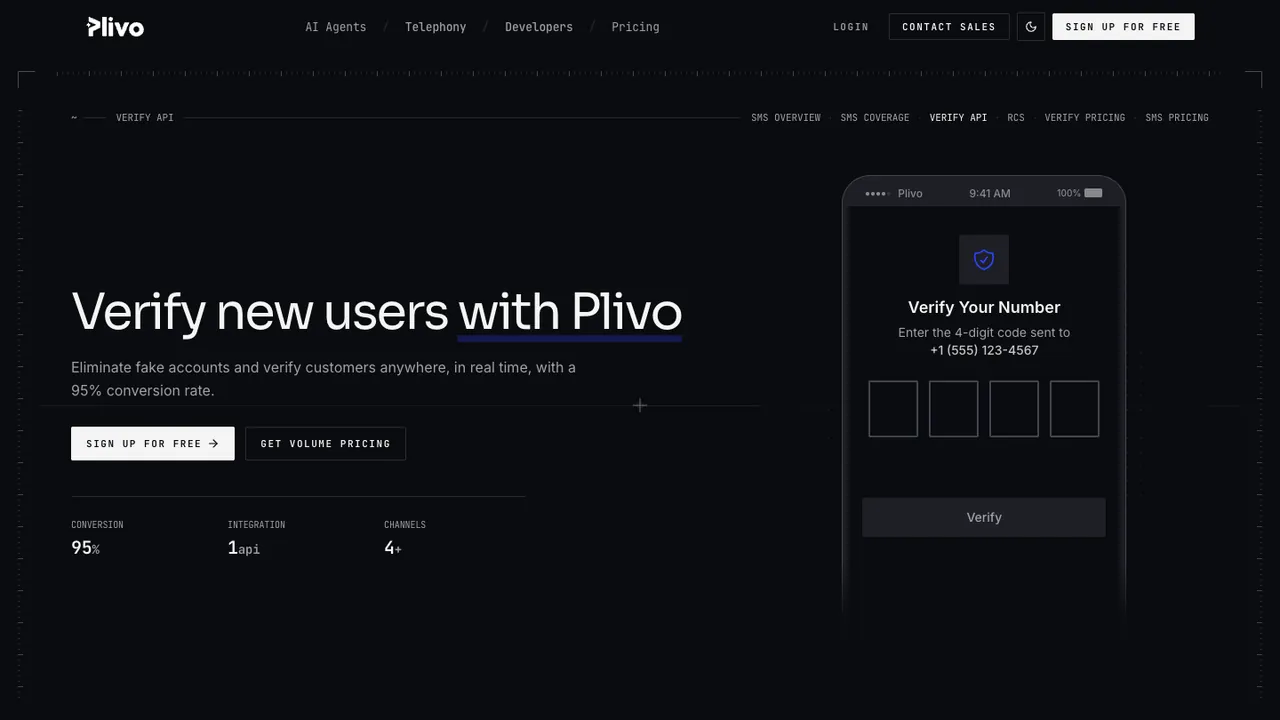
Plivo Verify is a managed OTP service for businesses that need verification through SMS, voice, and WhatsApp. Plivo users do not pay a separate verification fee, but pay the applicable channel charges for the destination they send to.
Plivo also includes Fraud Shield at no additional cost to help control SMS-pumping fraud. For setup, it provides pre-registered sender IDs and approved message templates, which can reduce the registration work involved where those options meet your requirements.
Your application creates a verification session to send a code, then submits the code the user entered for validation.
You can also customize OTP settings, change templates, and send messages in different languages.
7. Bird Verify
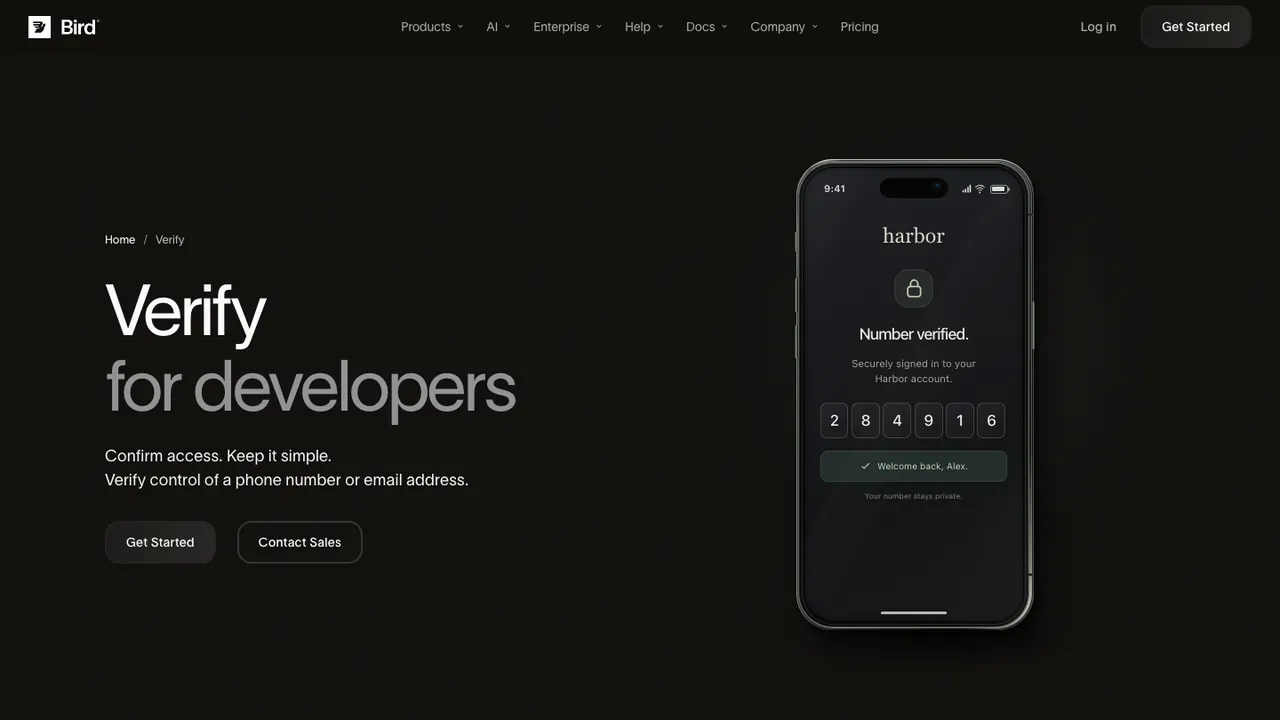
Bird Verify helps businesses verify phone numbers and email addresses through SMS, WhatsApp, email, and Telegram. Its integration follows a send-and-check model: your application requests a code, collects the user’s response, and submits it to Bird for validation.
Bird handles code generation, expiration, and verification-attempt limits. You can configure which channels to use in each country and the order in which Bird tries them.
When a send fails, delivery advances to the next channel in the plan. Your application can also request another channel when a user reports that the code has not arrived, rather than wait for a delivery-status update.
Bird documents its code-security controls in detail, including cryptographic code generation, hash-only storage, and limits on sends and incorrect guesses. Its dashboard and verification events also expose delivery activity and verification outcomes, giving developers information they can use to investigate unsuccessful attempts.
Verify has no separate platform or code-checking fee. You pay for delivery at the applicable channel rate. A resend or fallback to another channel counts as another send and can generate another charge, so the number of delivery attempts still matters when comparing costs.
8. Telesign Verify
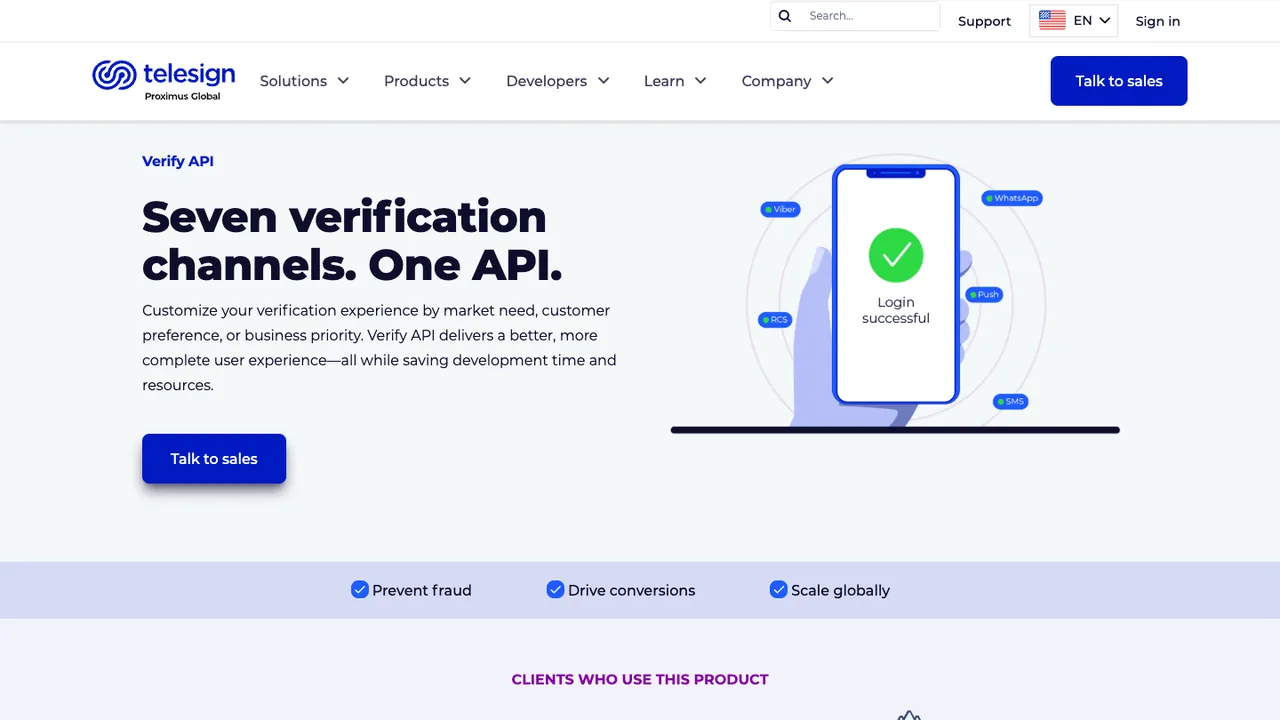
Telesign Verify combines OTP delivery through SMS, WhatsApp, RCS, Viber, and email with push approval and silent verification. Its mix of messaging channels and alternative authentication methods makes it an option for businesses that need several ways to verify users rather than relying on SMS codes alone.
Your developers can configure routing rules to choose the preferred verification channel and the fallback sequence. You can also set different routing preferences by market instead of applying the same channel order to every destination.
For integration, Telesign provides a REST API for OTP verification and mobile SDKs for additional verification methods. Its developer documentation states that the unified Verify API requires a full-service account, so businesses should contact Telesign to arrange access rather than assume that a standard self-service account includes the complete offering.
Pricing depends on the verification method and destination country, and Telesign also offers custom pricing for volume and committed use.
What to Consider Before Switching From Twilio Verify
If you are looking to switch away from Twilio Verify, consider how the OTP provider handles unsuccessful attempts, what your developers will need to change, and how you will measure whether switching has improved the process.
Compare the Total Cost of a Successful Verification
A lower advertised verification fee does not necessarily mean a lower overall bill.
Start with your monthly verification volume, the countries your users live in, and the channels you expect to use. Then compare the full billing structure, including any verification fees, message or call charges, carrier fees, and applicable sender-registration costs.
Pay particular attention to unsuccessful attempts and fallback. Ask whether the provider charges when a code is sent, delivered, or successfully verified, and what happens to the bill when another delivery attempt is necessary.
Request an estimate based on your actual destination mix and expected retries rather than comparing starting rates from different pricing pages.
Check Channel Availability in Your Main Markets
A provider’s country count does not tell you which channels you can use in each destination. Confirm availability for the countries you serve, along with any sender-registration, template, or local-number requirements that affect your setup.
Also, make a list of the verification methods your application currently uses. SMS and WhatsApp codes, authenticator-generated codes, push approvals, and silent network verification involve different workflows.
A service that covers your messaging channels may not replace every authentication method in your existing integration. Check whether those methods belong to the same verification product or require an additional service.
Understand What Happens When a Code Does Not Arrive
Check how the provider chooses the first delivery channel and what happens when that attempt does not reach the user. Confirm whether fallback happens automatically, requires a request from your application, or depends on the user selecting another option.
Ask what triggers the next attempt, how long the platform waits, and whether it reuses the same code.
Your developers should also understand what happens when a user requests a resend or your application repeats a request after a timeout.
Look at the information available when something goes wrong, too. Delivery events, verification states, and error responses should help your team distinguish an unsuccessful delivery from an expired code, an incorrect entry, or a blocked attempt.
Ask what support can investigate when a particular route causes repeated problems.
Review Fraud Controls and Security Requirements
Look beyond whether a provider lists “fraud protection” as a feature. Review how it generates and stores codes, enforces expiration, limits resend requests and incorrect guesses, and protects against artificially inflated SMS traffic.
Confirm which controls the service includes and which settings your team must configure.
For security reviews, request documentation that covers the verification service you plan to use.
A company-level certification does not automatically establish that every product and processing region falls within the same audit scope, so confirm the scope rather than relying on a badge on the provider’s website.
Assess the Work Required to Migrate
Compare the new provider’s API with your current implementation before estimating the work involved.
Map your send and verification-check requests, verification state, webhooks, rate limits, fraud settings, and fallback behavior to the replacement service.
Test the full workflow on real devices in your main markets before moving all traffic. Measure delivery time, successful verifications, retries, fallback outcomes, and total cost—not just whether the API accepts a request.
A controlled rollout gives you a way to check whether the alternative meets your delivery and cost requirements before committing to a complete switch.
Simplify Multichannel OTP Verification With SecondFactor
The right Twilio Verify alternative should address the reason you’re considering a switch, whether that’s delivery costs, channel availability, or the work involved in managing verification.
At SecondFactor, we bring channel selection, automatic fallback, and code verification into one API. Our Price Intelligence Engine chooses the lowest-cost eligible channel for each recipient and moves to another option when delivery is not confirmed.
Your developers integrate the send-and-verify flow while we handle the routing decisions behind it.
Create your SecondFactor account to try the PIE Playground. Send a real OTP, see which channel PIE selects and whether fallback occurs, then enter the code to complete verification before integrating the flow into your application.